
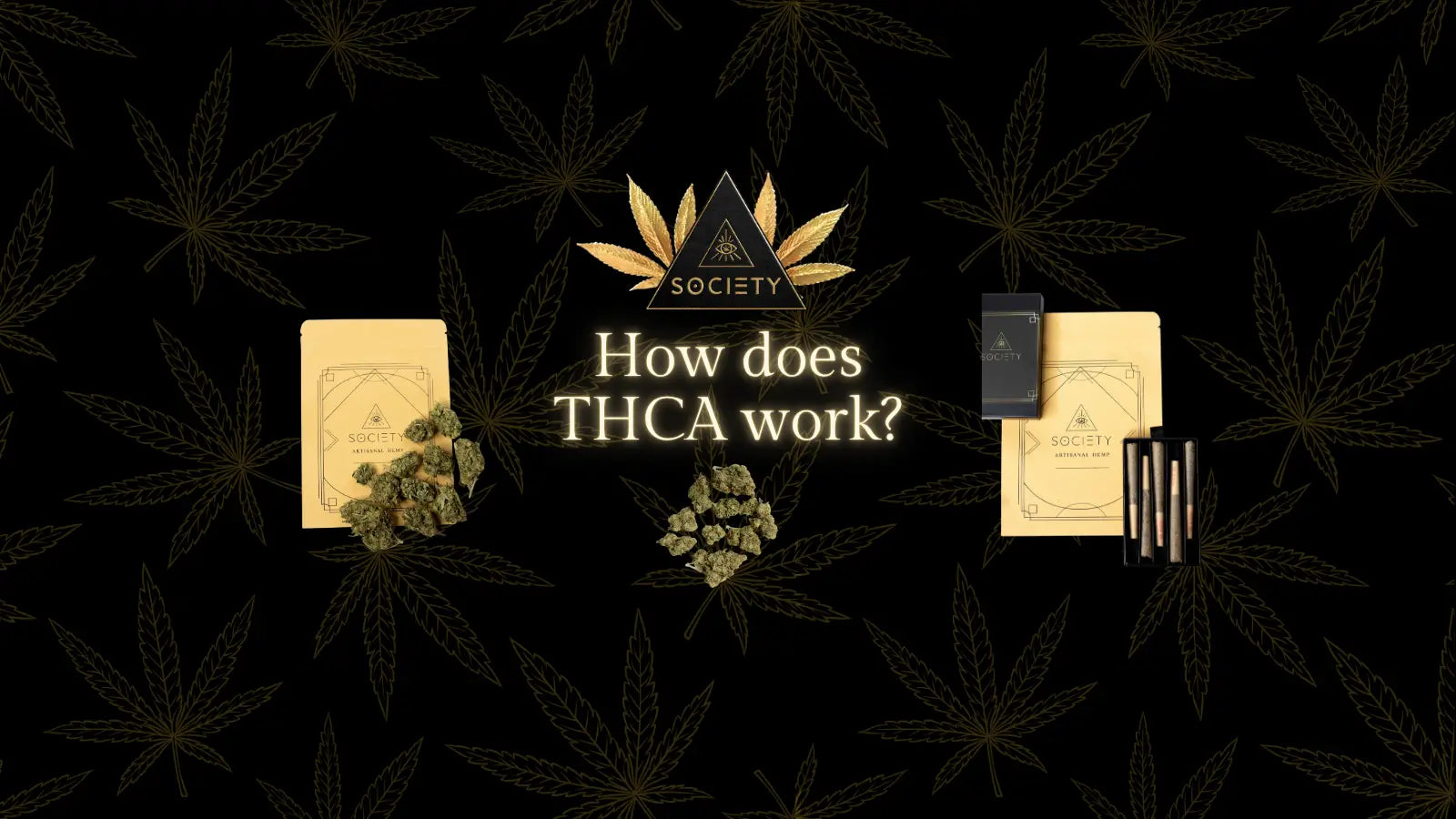
Does THCA Turn Into Delta 9 THC When Smoked?
THCA does convert to delta-9 THC when smoked through a process called decarboxylation, where heat removes the carboxylic acid group from THCA molecules. Specifically, temperatures above 220°F trigger this molecular transformation, converting non-psychoactive THCA into psychoactive delta-9 THC at approximately 87% efficiency. This is why raw cannabis flower won't produce intoxicating effects, but smoking the same flower will. Society's Plant has observed this firsthand since 2019, customers consistently report different effects from our raw hemp flower versus our decarboxylated products, confirming what Bianca's background in flavor science predicted about heat-activated cannabinoid conversion.
Why This Molecular Conversion Actually Matters
The difference between THCA and delta-9 THC isn't academic, it determines whether your hemp flower will provide psychoactive effects or therapeutic benefits without intoxication. This matters because many professionals seeking nervous system support want predictable outcomes, not surprise effects.
THCA in Its Natural State
Fresh hemp flower contains primarily THCA, not delta-9 THC. Raw THCA offers anti-inflammatory and neuroprotective properties without psychoactive effects. However, once heat is applied through smoking, vaporizing, or cooking, the molecular structure changes completely. Consequently, what starts as non-psychoactive THCA becomes psychoactive delta-9 THC.
The Heat Activation Threshold
Decarboxylation begins at approximately 220°F, but smoking temperatures reach 1,500-2,000°F. At these temperatures, THCA converts to delta-9 THC almost instantaneously. Furthermore, this conversion explains why edibles require baking or heating cannabis before infusion — raw cannabis added to food won't produce psychoactive effects.
Why Your Hemp Flower Experience Varies
Customers often report different effects from the same hemp flower depending on consumption method. For example, chewing raw flower produces minimal effects, while smoking produces noticeable psychoactive responses. This variation stems entirely from heat-activated THCA conversion, not inconsistent product quality.
Complete Guide to THCA Decarboxylation and Delta-9 Conversion
Understanding how THCA converts to delta-9 THC helps predict effects and choose appropriate consumption methods. This knowledge becomes essential when selecting hemp products for specific wellness goals.
The Decarboxylation Process Explained
Decarboxylation removes a carboxyl group (COOH) from THCA through heat application. Specifically, this process transforms the molecular structure from C22H30O4 (THCA) to C21H30O2 (delta-9 THC). The removed carbon dioxide gas explains why cannabis "bubbles" during heating — those bubbles indicate active decarboxylation. Temperature and time determine conversion efficiency:
- 220°F for 30-40 minutes: gradual, controlled conversion
- 250°F for 25-30 minutes: optimal balance of speed and efficiency
- 300°F+ for 10-15 minutes: rapid conversion with potential degradation
- Smoking temperatures (1,500°F+): instant conversion
Conversion Efficiency Rates
Research indicates THCA converts to delta-9 THC at approximately 87% efficiency under optimal conditions. However, smoking achieves nearly 100% conversion due to extreme temperatures. In contrast, improper decarboxylation can result in incomplete conversion or degradation to CBN.
Products That Bypass Conversion Complexity
For professionals seeking consistent effects without temperature guesswork, pre-decarboxylated products eliminate variables. Society's Plant's High Spirits Microdose Gummies contain precisely measured delta-9 THC (5mg) combined with THCV and CBG for balanced effects without conversion uncertainty. Similarly, our Focused Microdose Gummies provide 2mg delta-9 THC alongside mushrooms, CBG, THCV, and L-Theanine. Because these gummies contain already-converted delta-9 THC, effects remain consistent regardless of your metabolism or consumption method.
When THCA Conversion Goes Wrong
Excessive heat degrades delta-9 THC into CBN, a sedating cannabinoid. This explains why overheated cannabis produces sleepy effects rather than the energizing or focusing effects associated with fresh delta-9 THC. Therefore, proper temperature control during decarboxylation prevents unwanted CBN formation.
Non-Psychoactive Alternatives
For those seeking hemp benefits without psychoactive effects, products containing raw cannabinoids avoid conversion entirely. Our Raw CBDA Softgels maintain the natural acid form, providing anti-inflammatory benefits without any psychoactive potential. Additionally, Fucking Miracle THCV gummies contain zero THC while supporting energy and appetite control.
Scientific Research and Expert Analysis
Multiple peer-reviewed studies confirm THCA's conversion to delta-9 THC through decarboxylation, establishing this process as fundamental cannabis science rather than anecdotal observation.
Published Decarboxylation Research
A comprehensive analysis published in the Journal of Chromatography found that THCA converts to delta-9 THC at temperatures between 200-300°F, with peak efficiency occurring around 250°F. The study confirmed that smoking temperatures achieve near-complete conversion within seconds. Furthermore, researchers identified the specific molecular pathway: THCA → delta-9 THC + CO2.
Cultivation Expertise Perspective
Tad's experience cultivating hemp since 2012 reveals practical conversion insights laboratory studies miss. Fresh-harvested hemp flower contains primarily THCA, but improper curing can trigger premature decarboxylation. Specifically, excessive heat during drying converts THCA before consumption, altering the final product's cannabinoid profile. Bianca's background in flavor science provides additional context: decarboxylation resembles the Maillard reaction in food chemistry. Just as controlled heat develops desirable flavors in wine and spirits, controlled decarboxylation optimizes cannabinoid conversion without degradation.
Real-World Conversion Observations
After processing hemp for thousands of customers, Society's Plant consistently observes that smoking hemp flower produces different effects than consuming raw flower. This aligns perfectly with decarboxylation science — heat activation transforms the molecular structure and resulting physiological effects. Consequently, customers report more predictable experiences with products containing pre-converted delta-9 THC.
Frequently Asked Questions
Does vaping hemp flower convert THCA to delta-9 THC?
Vaping temperatures (350-400°F) effectively convert THCA to delta-9 THC, though less efficiently than smoking. Most vaporizers achieve 60-80% conversion rates, producing milder psychoactive effects than smoking the same flower. However, vaping preserves more terpenes and produces less CBN degradation compared to combustion methods.
Can you convert THCA to delta-9 without smoking?
Multiple methods convert THCA to delta-9 THC without smoking, including oven decarboxylation, vaporizing, and slow-cooking methods. Oven decarboxylation at 240°F for 30 minutes achieves optimal conversion for homemade edibles. Additionally, commercial products like our Good Day CBG Gummies contain pre-converted delta-9 THC, eliminating the need for home conversion.
How long does THCA take to convert when smoked?
THCA converts to delta-9 THC almost instantaneously when smoked due to combustion temperatures exceeding 1,500°F. The conversion occurs within the first few seconds of flame contact, meaning each puff delivers converted delta-9 THC rather than raw THCA. Therefore, effects from smoking appear faster than other consumption methods requiring digestion or absorption time. ###
Will raw THCA show up on drug tests?
Raw THCA typically doesn't trigger standard drug tests, which screen for delta-9 THC metabolites. However, some THCA converts to delta-9 THC naturally over time or through body heat, potentially causing positive results. Because drug test sensitivity varies, anyone subject to testing should avoid THCA products entirely or choose zero-THC alternatives like our Dream Tincture.
Does cooking with hemp flower convert THCA automatically?
Cooking temperatures above 220°F convert THCA to delta-9 THC, but conversion efficiency depends on temperature and duration. Baking at 350°F converts THCA within 15-20 minutes, while slow-cooking methods require longer exposure. For consistent results, decarboxylate flower separately before adding to recipes, or use products containing pre-converted cannabinoids.
What happens if THCA doesn't convert completely?
Incomplete THCA conversion results in weaker psychoactive effects and higher levels of raw THCA, which provides different therapeutic benefits. Some users prefer partial conversion for milder effects, while others seek complete conversion for stronger psychoactive responses. Products like our Big Beautiful Pill intentionally combine raw CBDA with converted CBD for broader therapeutic range.
Can you reverse delta-9 THC back to THCA?
Delta-9 THC cannot convert back to THCA because decarboxylation permanently removes the carboxylic acid group. However, delta-9 THC can degrade into CBN through heat, light, or oxygen exposure over time. This explains why old cannabis products often produce sedating rather than energizing effects — the delta-9 THC has degraded into sleep-promoting CBN.
Why do some hemp flowers contain both THCA and delta-9 THC?
Hemp flowers containing both THCA and delta-9 THC have undergone partial decarboxylation during processing, storage, or testing. Heat exposure during drying, UV light during storage, or laboratory preparation can convert some THCA while leaving the remainder intact. This dual-cannabinoid profile provides both immediate (delta-9) and heat-activated (THCA) effects when consumed.
Related Guides on Cannabinoids
- Best THC Gummies for Anxiety
- CBDA vs CBD: What's the Difference
- Best Microdose Gummies for Busy Moms
- Best Edibles for Focus: Canna Gummies for Moms
Skip the Chemistry Experiment
Converting THCA to delta-9 THC works perfectly in laboratory settings with precise temperature control and timing. In real life, most people just want predictable effects without becoming amateur chemists. That's exactly why we pre-convert cannabinoids in our gummies — no guesswork, no temperature monitoring, no wondering if your lighter burned too hot. Just consistent results from products formulated by people who actually understand the science.
Disclaimer: These statements have not been evaluated by the FDA. This product is not intended to diagnose, treat, cure, or prevent any disease. Consult your healthcare provider before starting any new supplement.

Leave a comment
This site is protected by hCaptcha and the hCaptcha Privacy Policy and Terms of Service apply.