
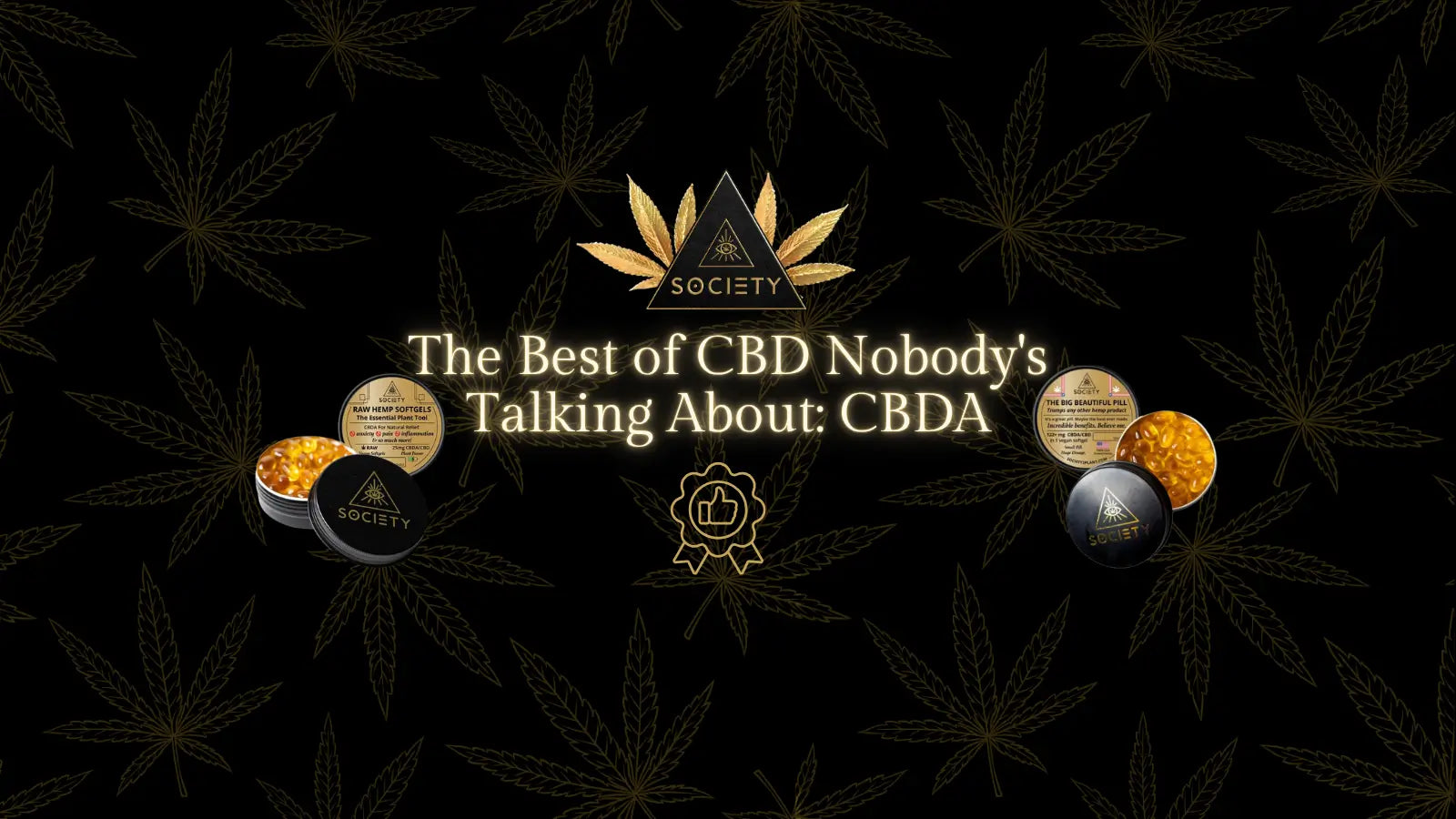
CBDA: Everything You Need to Know
CBDA, cannabidiolic acid, is the raw, unheated precursor to CBD found in live and minimally processed hemp, and it behaves differently in the body in ways that matter. Research led by Dr. Raphael Mechoulam, the Israeli chemist who first isolated THC, found that certain CBDA derivatives show bioavailability 10 to 18 times higher than conventional CBD. This post covers the full picture: how CBDA works, what the science says about inflammation, anxiety, pain, and cognition, and which Society's Plant softgel format fits your specific goal.
What Does CBDA Do for the Body? TL;DR
- CBDA is significantly more bioavailable than CBD, research points to 10–18x greater absorption in certain formulations, meaning the body uses more of it per milligram
- It acts directly on serotonin receptors (5-HT1A) and COX-2 enzymes, supporting mood, nausea relief, and inflammation through distinct pathways that differ from standard CBD
- CBDA does not produce intoxication, it does not bind directly to CB1 receptors and will not alter perception or impair function
- It may support anxiety, inflammation, pain, nausea, and daily mood without the sedation that higher-dose CBD can create
- Heating destroys CBDA, it converts to CBD through a process called decarboxylation, which is why cold-extracted, raw softgels are the only delivery format that preserves its unique biological activity
- Society's Plant offers three distinct CBDA softgel formulas: Raw CBDA Softgels for daily anti-inflammatory support, the Big Beautiful Pill for full-spectrum body and wellness support, and the Laser Focus Pill for cognitive clarity and mental sharpness
Why Most People Have Never Heard of CBDA
CBD has been mainstream for years. CBDA is its less-marketed, arguably more potent predecessor, and it spent most of the last decade being treated as an intermediate step on the way to CBD rather than a destination in its own right. That framing is shifting. The same researchers who validated CBD's mechanisms are now publishing on CBDA's direct receptor activity, and the broader wellness space is catching up.
For people who tried CBD and felt underwhelmed, or who were taking high milligram doses to get a noticeable effect, CBDA represents a meaningfully different conversation. The bioavailability advantage alone changes the value equation: a smaller dose, better absorbed, working through more specific pathways.
Is CBDA the Same as THCA?
CBDA and THCA are both raw, acid-form cannabinoids found in unheated hemp, but they are distinct compounds with different effects. THCA is the acidic precursor to THC, when heated, it converts to the psychoactive compound most people associate with cannabis. CBDA is the acidic precursor to CBD, and it does not convert to anything intoxicating. Both share some overlapping anti-inflammatory properties, but CBDA's activity at serotonin receptors and THCA's interaction with the endocannabinoid system make them complementary rather than interchangeable. For a full breakdown of how heating changes cannabinoid activity, this guide on decarboxylated cannabis covers the chemistry clearly.
Is CBDA Legal?
Yes. CBDA derived from hemp containing less than 0.3% delta-9 THC by dry weight is legal under the 2018 Farm Bill. Society's Plant is a Michigan-based hemp farm founded in 2019 by Bianca Snyder, co-founded with Tad Snyder, who has worked in cannabis cultivation since 2012. Every product is Farm Bill compliant and third-party lab tested, with certificates of analysis published at societysplant.com/pages/labs.
Bottom line: CBDA is a non-intoxicating, Farm Bill compliant cannabinoid that works through distinct biological pathways, absorbs more efficiently than standard CBD, and is preserved only through cold extraction and raw delivery formats like softgels.
How CBDA Works in the Body: The Cannabinoid Science
CBDA is a carboxylic acid form of CBD that exists in the raw hemp plant before any heat is applied. When hemp is smoked, vaporized, cooked, or even stored at elevated temperatures over time, CBDA undergoes decarboxylation, it loses its acid group and becomes CBD. This is why you cannot get CBDA from a heated or processed product, and why co2 extracted raw softgels are the only reliable way to deliver it intact.
The 5-HT1A Serotonin Receptor Connection
CBDA's most well-documented mechanism is its activity at the 5-HT1A serotonin receptor. The 2013 study on CBDA and serotonin receptor activity published in the British Journal of Pharmacology found that CBDA was a more potent agonist at the 5-HT1A receptor than CBD itself, particularly under conditions of acute stress. This is the same receptor class targeted by many anti-anxiety and anti-nausea medications. That receptor activity is the most likely explanation for CBDA's observed effects on both anxiety and stress response, and it is mechanistically distinct from how standard CBD modulates the nervous system.
COX-2 Inhibition and the Inflammation Pathway
CBDA also inhibits the COX-2 enzyme, cyclooxygenase-2, which is the same enzyme targeted by over-the-counter NSAIDs like ibuprofen and naproxen. The 2008 study on CBDA and COX-2 enzyme inhibition confirmed that CBDA's anti-inflammatory action is direct and selective, rather than broad-spectrum. COX-2 drives prostaglandin production, which is central to pain signaling and swelling. This pathway is why CBDA is increasingly relevant for people managing chronic inflammatory conditions, autoimmune responses, and everyday physical discomfort.
Unlike CBD, which modulates inflammation through the broader endocannabinoid system, CBDA takes a more targeted route through COX-2, similar in mechanism to a pharmaceutical NSAID, but without requiring synthetic modification. That specificity matters for those who want support without systemic sedation or gut irritation.
Bioavailability: What 10–18x Actually Means for Your Dose
Standard oral CBD is notoriously difficult to absorb. Bioavailability estimates for conventional CBD range from 6% to 19%, depending on formulation, whether it was taken with food, and individual metabolism. Dr. Mechoulam's research team at Hebrew University specifically pursued acid-form cannabinoids because of this bioavailability problem. Their work showed that CBDA and related acid cannabinoids demonstrate 10 to 18 times greater absorption in certain formulations compared to their decarboxylated counterparts. In practical terms, 10mg of well-formulated CBDA may deliver results comparable to 100–180mg of standard CBD. That changes what an effective dose looks like, and it changes the cost of maintaining a consistent protocol.
Can CBDA Lower Cortisol?
There is no direct human clinical trial establishing that CBDA lowers cortisol levels, so that specific claim requires nuance. However, CBDA's activity at the 5-HT1A receptor is relevant here: serotonin signaling plays a role in regulating the HPA axis, which governs cortisol release. When the stress response is modulated through serotonin pathways, downstream cortisol output may be affected. This is a plausible mechanism, but it should be framed as supportive of stress regulation rather than a proven cortisol-lowering therapy. For people experiencing elevated baseline anxiety or chronic stress, CBDA's serotonergic activity offers a rational place to start.
Is CBDA Good for Hashimoto's Thyroiditis?
CBDA has not been studied directly in Hashimoto's populations, but its COX-2 inhibition and anti-inflammatory mechanisms are relevant to autoimmune inflammatory conditions broadly. Hashimoto's is characterized by chronic immune-mediated inflammation of the thyroid, and compounds that selectively reduce COX-2 activity may help manage the inflammatory component of the condition. Anyone managing an autoimmune diagnosis should discuss cannabinoid use with their physician, particularly regarding interactions with thyroid medication or immunosuppressants.
Can I Take CBDA If I Take Statins?
This is a meaningful clinical question. CBDA, like CBD, is metabolized through the cytochrome P450 enzyme system, specifically CYP3A4 and CYP2C9. Statins are also processed through this pathway, and combining them with cannabinoids may alter how either compound is metabolized. This does not mean CBDA is unsafe with statins, but it does mean a conversation with a prescribing physician is warranted before starting. Dose timing, monitoring, and individual liver enzyme activity all factor in. This is a case where "check with your doctor" is not a disclaimer, it is genuinely useful information.
Key takeaway: CBDA works through two distinct, well-documented mechanisms, serotonin receptor agonism and COX-2 inhibition, and absorbs significantly more efficiently than standard CBD. These are not interchangeable compounds.
How to Take CBDA: Dosing, Timing, and What to Expect
CBDA is best delivered through co2 extracted raw softgels, which preserve the acid form of the cannabinoid through cold processing. Onset for softgels is approximately 45 to 60 minutes, with effects typically lasting 4 to 8 hours. Because CBDA is fat-soluble, taking it alongside a meal or a dietary fat source, a handful of nuts, avocado, or even a fish oil softgel, meaningfully improves absorption.
First-Timers: Starting a CBDA Protocol
Anyone new to CBDA should begin with one softgel daily, taken with food in the morning. Give it five to seven consistent days before drawing conclusions. CBDA is not a compound that typically announces itself on the first dose, its benefits build with consistent use, similar to a magnesium or omega-3 protocol. The absence of an immediate noticeable sensation is not a sign that it is not working; it is a sign it is working the way an anti-inflammatory compound is supposed to work.
For a more detailed approach to building a CBDA protocol, this guide on using CBDA softgels effectively covers timing, food pairing, and dose stacking in practical terms.
Transitioning from CBD to CBDA
For people moving from standard CBD to CBDA, the milligram comparison is not linear. CBDA at 25–50mg may deliver what 250–500mg of standard CBD was producing, or more. Start with the lower milligram end available and assess after two full weeks. Adding a second softgel at midday is reasonable for people managing persistent inflammation, chronic pain, or anxiety that requires sustained coverage throughout the day.
Morning, Midday, or Evening: When to Take CBDA
Some people find it works well as a morning addition, taken with breakfast for anti-inflammatory and mood-stabilizing effects that sustain across the day. Evening use is appropriate for those managing cortisol dysregulation, stress-related tension, or difficulty with sleep onset driven by an overactive nervous system rather than a sleep disorder specifically.
Which Softgel Matches Which Goal
Society's Plant makes three distinct CBDA softgel formulas, each built for a different priority. The Raw CBDA Softgels are the purest entry point: co2 extracted, minimally processed, and designed for daily anti-inflammatory and anti-anxiety support, recommended to take at bedtime. The Big Beautiful Pill combines 76mg CBD and 47mg CBDA for a full-spectrum and stronger approach to inflammation, hormonal and pain support. The Laser Focus Pill pairs 25mg CBDA with 22mg CBG and 11mg THCV, targeting cognitive clarity, sustained mental energy, and focus with the benefits of CBDA to address pain, anxiety and inflamation. Each contains trace amounts of THC and is Farm Bill compliant.
Key takeaway: Start with one softgel daily. The right formula depends on whether your primary goal is inflammation control, full-body wellness, or cognitive function. You can take multiple (1-5) of the Raw Softgels to fight pain or take 1-2 Big Beautiful Pill, or take 1 Laser Focus Pill for daytime cognition.
CBDA Testimonials: from People Feeling Real Results
"I was taking 150mg of CBD oil every day and spending a fortune on it," says Jen, 41, a corporate attorney from Dallas. "I switched to the Raw CBDA Softgels and within two weeks cut my dose in half. My joints feel the same, maybe better. My wallet definitely does."
Carla, 38, a physical therapist from San Diego, had a different starting point. "I was skeptical about the Laser Focus Pill because I thought a softgel for focus sounded like a stretch," she says. "But I have a job that requires me to be mentally sharp for eight-plus hours, and I kept hitting a wall around 2pm. I've been taking it with lunch for about three weeks and that wall is just gone. No crash, no jitters, no weird energy. Just clearer." The research on why CBDA supports mental clarity differently than standard stimulants reflects exactly what Carla described: CBDA plus CBG plus THCV creates a functional cognitive stack rather than a stimulant spike.
"I picked up the Big Beautiful Pill because it was marketed for skin and body wellness, and honestly that was the hook," admits Raquel, 44, a marketing director from Brooklyn. "But what surprised me was how much calmer I felt overall. Less reactive. Less inflamed in every sense of the word. I didn't expect a softgel to do that, but here we are."
Honest Pros and Cons of CBDA
What CBDA Does Well
- Superior absorption efficiency: The 10–18x bioavailability advantage over standard CBD means smaller doses can achieve meaningful effects, making it more cost-effective over time than high-milligram CBD products.
- Dual anti-inflammatory and anxiolytic mechanisms: CBDA works through both COX-2 inhibition and 5-HT1A receptor agonism simultaneously, which covers inflammatory and stress-related pathways in a single compound rather than requiring stacking.
- No intoxication, no sedation at functional doses: CBDA does not bind to CB1 receptors and does not produce the foggy or tired feeling that can accompany higher-dose CBD oils. It supports the nervous system without dulling it.
Where CBDA Has Limitations
- Slower onset than some people expect: Softgels take 45 to 60 minutes to begin working. If someone needs acute relief quickly, a softgel is not the right delivery format for that moment, though it remains the best format for sustained daily support. Pairing CBDA softgels with a faster-acting option during acute flares is a reasonable approach.
- Benefits accumulate rather than appear immediately: CBDA is not an on-demand compound. People who expect a first-dose dramatic shift may feel underwhelmed before the cumulative anti-inflammatory effect builds. Consistency over days and weeks is where CBDA earns its results.
- Heat destroys it: CBDA cannot be taken in tea, added to food, or stored in a hot car. The cold-chain integrity of co2 extracted softgels is essential. This is a real logistical consideration, not a reason to avoid CBDA, but a reason to store it correctly and not assume any CBD product on the shelf contains active CBDA.
CBDA for Pain, Inflammation, and the Nervous System
CBDA is a meaningful option for people managing chronic pain and inflammation because its COX-2 mechanism directly targets the prostaglandin pathway that drives both. This is not a general "may support wellness" claim, it is a mechanistically grounded action that parallels how NSAIDs work, without requiring synthetic pharmaceutical intervention. For people who cannot tolerate NSAIDs due to gut issues, or who want to reduce their reliance on over-the-counter pain medications, CBDA offers a rational alternative worth exploring with a healthcare provider.
Is CBDA Anti-Inflammatory?
Yes. CBDA's anti-inflammatory action is documented through COX-2 enzyme inhibition, confirmed in the 2008 study on CBDA and COX-2 enzyme inhibition. COX-2 is the enzyme responsible for producing prostaglandins, the signaling molecules that create pain, swelling, and fever. By selectively inhibiting COX-2, CBDA reduces prostaglandin production at the source. This is distinct from broader endocannabinoid system modulation, and it is why CBDA may be more effective than standard CBD for conditions driven primarily by inflammatory pathways rather than endocannabinoid deficiency.
Is CBDA Good for Pain, Including Neuropathy?
CBDA's COX-2 inhibition is most relevant for inflammatory pain, which includes joint pain, muscle soreness, headaches, and conditions like arthritis. For neuropathic pain specifically, the picture is more nuanced. Neuropathy involves damaged or dysfunctional nerve signaling rather than purely inflammatory pain, and while CBDA's serotonin receptor activity may support the nervous system's stress response, there is not yet direct clinical evidence specifically for CBDA in neuropathic pain management. The full breakdown of why CBDA outperforms standard CBD for pain covers the distinction between inflammatory and neuropathic mechanisms in more detail. For neuropathy, a full-spectrum approach like the Big Beautiful Pill, which combines CBD and CBDA, may provide broader coverage across pain pathways.
Does CBDA Make You Hungry or Sleepy?
CBDA does not stimulate appetite the way THC does. It does not activate CB1 receptors, which are the primary drivers of the appetite-stimulating effect commonly associated with cannabis. Similarly, CBDA is not sedating, it does not cause drowsiness at functional doses, and unlike higher-dose CBD products, it tends to support calm alertness rather than mental heaviness. People who find that standard CBD makes them feel sluggish often respond more favorably to CBDA specifically because of this distinction.
Is CBDA Good for Anxiety?
Yes, and the mechanism is specific. CBDA's agonism at the 5-HT1A serotonin receptor is the most likely driver of its anxiolytic effect. The same receptor that SSRI medications target indirectly is activated more directly by CBDA, particularly under acute stress conditions. The 2013 study on CBDA and serotonin receptor activity found CBDA outperformed CBD in this regard under stress-induced conditions. This does not mean CBDA replaces pharmaceutical anxiety treatment for clinical anxiety disorders, but for everyday stress, nervous system dysregulation, and situational anxiety, it is a well-supported option.
CBDA and the Brain: Early Research on Cognitive Protection
Emerging preclinical research is examining CBDA's neuroprotective potential. The 2023 study showing CBDA rescued memory deficits and reduced amyloid-beta and tau pathology in an Alzheimer's disease model is notable, though it is important to be clear that this was an animal study, not a human clinical trial. The findings are promising early signals rather than confirmed human outcomes. The cognitive-focused formulation in the Laser Focus Pill, which combines CBDA with CBG and THCV, reflects the growing interest in cannabinoid-based cognitive support.
Key takeaway: CBDA addresses pain and inflammation through a specific enzymatic pathway, supports the nervous system through serotonin receptor activity, and does not cause sedation or appetite stimulation, making it usable at any time of day without functional compromise.
CBDA vs CBD: Which One Should You Take?
CBDA and CBD are not interchangeable. They share a precursor-product relationship, CBDA becomes CBD when heated, but they interact with the body through different mechanisms and absorb at dramatically different rates. Choosing between them depends on what you are trying to support and how your body responds to each.
When CBD Makes Sense
Standard CBD remains a well-studied compound with a broader body of human clinical data behind it. It works through the endocannabinoid system broadly, modulating CB1 and CB2 receptor activity and affecting inflammation, pain, sleep, and mood through those pathways. For people who respond well to CBD and find their current dose effective, there is no urgent reason to switch. Full-spectrum CBD products that include a range of cannabinoids, like the Big Beautiful Pill with 76mg CBD and 47mg CBDA, capture both pathways simultaneously.
When CBDA Makes More Sense
CBDA is the stronger choice when someone has found that CBD requires very high milligram doses to produce an effect, or when inflammation, nausea, and anxiety are the primary concerns rather than sleep or broad endocannabinoid support. The bioavailability advantage means the body does more with less, which is particularly relevant for people with digestive absorption issues or those who prefer a lower-dose approach. The co2 extracted Raw CBDA Softgels are the clearest entry point for someone wanting to experience CBDA on its own terms before adding the complexity of a full-spectrum formula.
Is CBDA Addictive?
No. CBDA does not act on reward pathways in the brain in the way that addictive substances do. It does not bind to CB1 receptors and does not produce psychoactive effects, euphoria, or withdrawal symptoms with consistent use. The World Health Organization's expert committee on drug dependence has concluded that CBD itself has no abuse potential, and CBDA shares this profile. Stopping CBDA does not produce dependence or withdrawal, the body simply returns to its baseline without the compound's support.
What Are the Side Effects of CBDA?
CBDA is generally well-tolerated. The most commonly reported side effects in studies involving acid cannabinoids are mild and include digestive sensitivity in some individuals when taken without food, and occasional light-headedness at higher doses. Because CBDA is metabolized through the CYP450 enzyme system, it may interact with medications processed through the same pathway, including blood thinners, some antidepressants, and statins. Anyone on prescription medication should discuss CBDA with their physician before starting. There are no documented severe adverse effects from CBDA at doses used in wellness contexts.
Key takeaway: CBDA and CBD work through different mechanisms, CBDA is better suited for inflammation, anxiety, and nausea support at lower doses, while CBD provides broader endocannabinoid system modulation. The strongest approach for most people combines both, which is exactly what the Big Beautiful Pill was designed to do.
Three CBDA Softgels, Three Different Goals
Society's Plant built three distinct softgel formulas because one cannabinoid profile does not serve every need. Each softgel is co2 extracted, Farm Bill compliant, third-party tested, and formulated to do something specific. Here is how to match the formula to the goal.
|
Softgel |
Key Cannabinoids |
Primary Goal |
Best Timing |
|
CBDA (high-dose, raw) |
Daily anti-inflammatory support, anxiety, nausea |
Morning with food |
|
|
76mg CBD + 47mg CBDA |
Full-spectrum body wellness, skin, hormonal support, inflammation |
Morning or midday with food |
|
|
25mg CBDA + 22mg CBG + 11mg THCV |
Cognitive clarity, sustained focus, mental energy without jitters |
Morning or midday, not recommended for evenings |
Raw CBDA Softgels: The Foundation
The Raw CBDA Softgels are the purest expression of what CBDA does on its own. They are designed for people who want the anti-inflammatory, anti-nausea, and anxiety-supportive effects of CBDA without additional cannabinoid layers. This is the right starting point for someone new to CBDA, or for someone who wants a clean daily baseline before adding other cannabinoids. Take one daily with food and assess after seven to ten days.
Big Beautiful Pill: Full-Spectrum Body Support
The Big Beautiful Pill combines 76mg of CBD with 47mg of CBDA, a full-spectrum approach that covers both the endocannabinoid system broadly (through CBD) and the more targeted COX-2 and serotonin pathways (through CBDA). This softgel is particularly well-suited for people managing chronic inflammation, skin health concerns, hormonal fluctuation, or those who want comprehensive daily wellness support rather than a single-target effect. The combined cannabinoid load makes this the highest-coverage option in the lineup.
Laser Focus Pill: Cognitive Stack in a Softgel
The Laser Focus Pill is not just a CBDA product, it is a functional cognitive formula. The 25mg CBDA provides the serotonergic and anti-inflammatory foundation. The 22mg CBG adds neuroprotective and focus-supporting properties. The 11mg THCV contributes to mental energy and appetite regulation without sedation. Together, these three cannabinoids create a stack that supports clear, sustained thinking across a demanding day. This is the softgel for someone who needs to be on and sharp, not calm and horizontal.
Key takeaway: Start with Raw CBDA for the simplest anti-inflammatory protocol. Choose Big Beautiful Pill for full-spectrum body and wellness coverage. Choose Laser Focus Pill when cognitive clarity and sustained mental energy are the priority.
CBDA FAQ: Your Specific Questions Answered
Does CBDA turn into CBD inside the body?
CBDA does not convert to CBD inside the body at meaningful rates under normal physiological conditions. Decarboxylation, the process that converts CBDA to CBD, requires heat or extended time at elevated temperatures. When CBDA is taken in a raw softgel form, it is absorbed and metabolized as CBDA, interacting with receptors as its acid form rather than converting first. This is precisely why raw, co2 extracted softgels are the correct delivery method: they preserve CBDA's distinct biological activity rather than losing it through processing. Some minor enzymatic conversion may occur during digestion, but the majority of CBDA's action happens as the compound itself.
Does CBDA show up on a drug test?
CBDA itself is not the compound that standard drug tests screen for, those tests detect THC metabolites, specifically THC-COOH. However, Society's Plant CBDA softgels are hemp-derived and contain trace amounts of naturally occurring THC, as is true of any full-spectrum or broad-spectrum hemp product. Naturally occurring THC from hemp may show up on a drug test with regular use. Anyone subject to workplace drug testing should consider this carefully before starting any hemp-derived cannabinoid product, regardless of how low the THC content is.
Does CBDA lower blood pressure?
There is no direct clinical evidence establishing that CBDA lowers blood pressure in humans. However, CBDA's serotonin receptor activity and anti-inflammatory properties may support cardiovascular system function indirectly over time. CBD has been studied more extensively in this context, with some research suggesting it may support healthy blood pressure under stress. Because CBDA works through overlapping pathways, the potential is plausible, but anyone managing hypertension or taking blood pressure medication should discuss cannabinoid use with their cardiologist before starting, particularly given the CYP450 enzyme interactions involved.
Is CBDA intoxicating, and can it be used during the day?
CBDA is not intoxicating. It does not bind directly to CB1 receptors, does not alter perception, and does not produce the euphoric or sedating effects associated with THC. Unlike higher-dose CBD products that can occasionally create a foggy or heavy feeling, CBDA at functional doses tends to support calm clarity rather than dulling cognitive sharpness. This makes it well-suited for daytime use, and specifically makes theLaser Focus Pill a functional daytime option for people who need to think clearly while also supporting their nervous system and inflammation response. Effects vary by individual, so starting with one softgel and assessing personally is always the right approach.
How does CBDA compare to CBDA + CBG + THCV for focus and ADHD?
Raw CBDA alone supports the nervous system, reduces inflammation, and modulates stress through serotonin pathways, all of which contribute to better baseline cognitive function. However, for people specifically managing focus challenges, attention dysregulation, or the kind of mental fatigue that derails a workday, the addition of CBG and THCV in the Laser Focus Pill adds meaningful functional layers. CBG has been studied for its neuroprotective properties and its interaction with alpha-2 adrenergic receptors, which are involved in attention and focus. THCV modulates CB1 receptors in ways that can support energy and reduce cognitive fog. For more on the ADHD-specific cannabinoid stack, this guide on the best edibles for focus and ADHD covers the full reasoning behind why cannabinoid combinations outperform single compounds for attention support.
What are the benefits of THCA and CBDA together?
THCA and CBDA are both raw acid-form cannabinoids with anti-inflammatory properties, but they work through different pathways and produce different effects. CBDA primarily targets COX-2 enzymes and 5-HT1A receptors. THCA has shown activity at TRPA1 and PPAR-gamma receptors, which are involved in inflammation, pain, and neuroprotection. When used together in full-spectrum raw hemp products, they may provide broader anti-inflammatory coverage than either compound alone. Neither converts to its intoxicating form in a raw, unheated product. However, Society's Plant softgels are specifically optimized around CBDA's bioavailability profile rather than a combined THCA/CBDA approach, so the two are currently addressed through separate product formats.
How is CBDA different from what's in standard CBD softgels on the market?
Most CBD softgels on the market contain CBD, the decarboxylated, heated form, because it is more shelf-stable and less technically demanding to produce. Preserving CBDA requires cold processing, careful storage, and raw extraction methods that most manufacturers do not prioritize. The result is that virtually all CBD softgels sold in mainstream retail have zero CBDA content, even if the label mentions hemp. Society's Plant's raw softgel line is specifically formulated around CBDA's intact acid form, using co2 extraction and cold processing to preserve what makes CBDA distinct. For a side-by-side breakdown of what this difference means in practice, this guide comparing CBDA and CBD absorption covers the full story.
Related Guides Worth Reading
- Why CBDA outperforms standard CBD for pain and inflammation management
- CBDA vs CBD: the absorption science and what it means for your dose
- Why CBDA softgels are outperforming THC gummies for migraine support
- How to choose between CBDA, CBG, and THC-based options for anxiety support
Here is what the research actually says: you have been taking 150mg of CBD because that is what it takes to feel something, and the reason it takes that much is that your body is absorbing maybe 12% of it. CBDA is not a trend, it is the compound that was always there,naturally, before the heat got to it, before the processing stripped it down. The body uses more of the molecule, with less. That is not a wellness pitch. That is just the chemistry doing what chemistry does.
These statements have not been evaluated by the Food and Drug Administration. This product is not intended to diagnose, treat, cure, or prevent any disease. Consult a healthcare professional before starting any new supplement.


Leave a comment
This site is protected by hCaptcha and the hCaptcha Privacy Policy and Terms of Service apply.